Engaging the Whole Child in Natural Environments
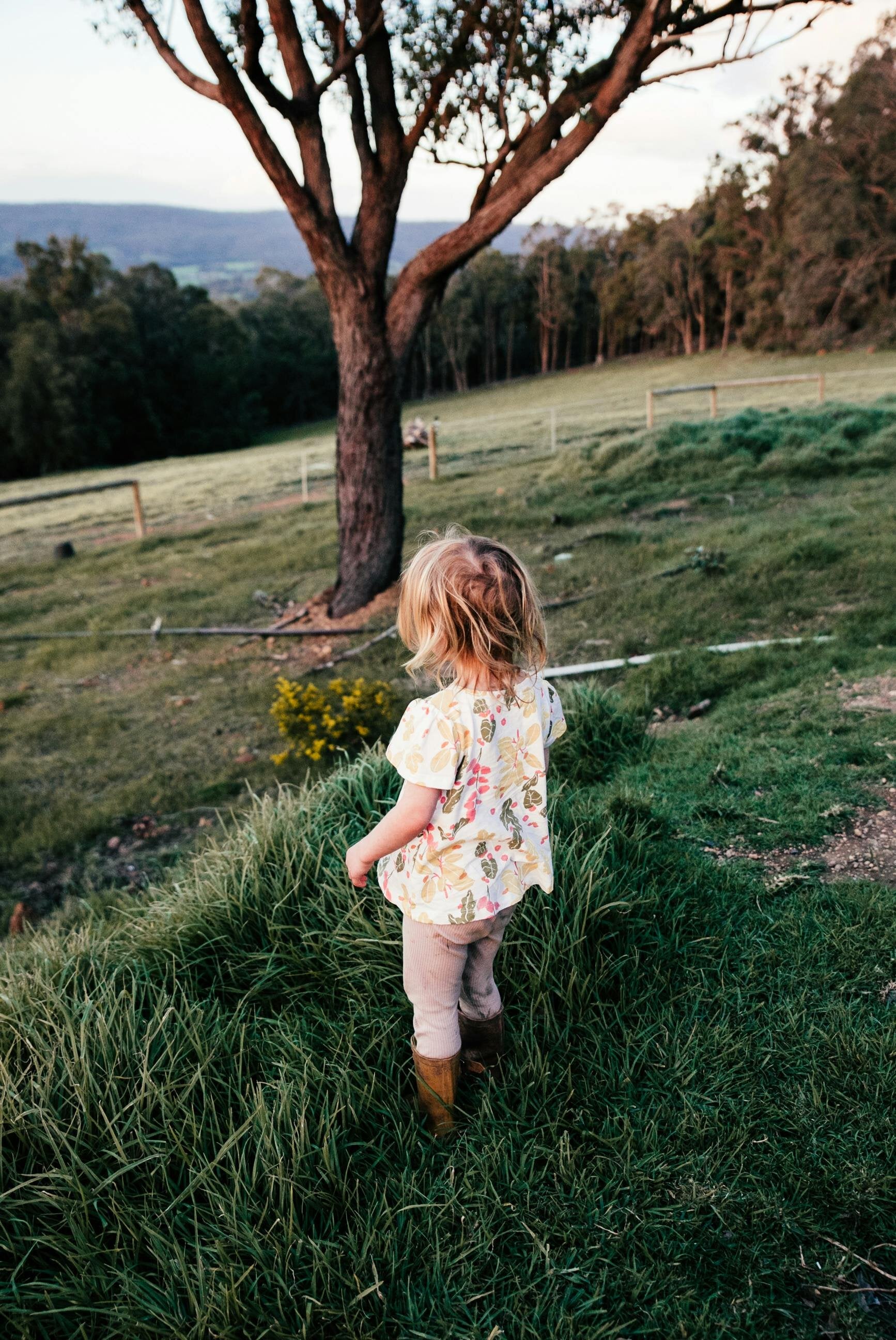
The institution Overmarksgården is a farm kindergarten as indicated by the sign at the entrance to the property. It reads Gårbornehave which translates to farm kindergarten, but I see the english word on the end (have) continuing to its full phrase haven, and I am amazed at the accuracy. A have is a garden, a place regarded as a solace for something deeper within us that reaches out to nature seeking profound comfort and inspiration. When I imagine myself there, with great expanses of grass, tended gardens and mossy trees, I feel the limitless possibilities and essence of ease this garden-haven inspires. I have fun running down the rolling hills and playing in the wide-open spaces. I gaze out at these forest playgrounds and feel contentment and hope because of who the children might become with these connections to nature. There are also many play structures to choose from and tools or loose parts to activate the imagination. The Gårbornehave has several rooms and outdoor play spaces signified by their cardinal direction. The children are designated to a direction in which they play and bond with the surroundings. There they learn to use tools, care for animals and develop socially. The children are brought along to tend the hen house, feed the pigs, lambs, and rabbits. They remember these activities happen daily and they ask to help, or the adults see the child needs a break or calming activity and they ask the child(ren) to come along. These practical activities appear to captivate the children. Perhaps they feel the weight of trust, the burgeoning ability to complete these tasks independently, or the deeply ingrained human fascination with watching orange flames lick the side of a pot cooking a soup for lunch.
Nature-Based Theory
What I am most struck by is the way caring acts that give back to the environment seem to be unavoidable. The setting and tools available carry so much potential to solidify the necessity of this practice and all the diverse ways we can help to bring balance to the natural world around us. The children naturally weed the gardens as they pick the visually appealing blooms which gives was for other plants positively benefiting the soils, insects, and overall supporting environmental harmony. They learn to leave some plants alone, why they are there, and what depends on them for nutrients. In their play the children also test the limits of their environment— like the nearby trees, bending the new branches to see if they will support their weight when they climb. They hold the bugs they find hostage in buckets and pick all the blooming flowers they can find. Very often they cannot be dissuaded from this kind of play and the adults do not seem to stop them. They are building a relationship with their environment and developing their social understanding beyond their newly discovered selfhood. When they run to a friend who cries out and they ask if they are okay, they are displaying that empathy. The process of caring for animals is done with the intention of developing empathy for other forms of life, but they also do not avoid the difficult conversations about the results of our actions, accidents, and death. They make it clear which animals are raised to become a treasured early winter meal, and they show the children the lamb who was still born in the spring. They make a small headstone for the mole they find deal in the flooded garden after a rainstorm and help the children process both the common cycles of which death is a part and the unexpected cases. The weather changes drastically which infuses the play with life and novelty. For example, a sudden rainstorm can invigorate the children to run to shelter and look after each other playing out imaginary survival scenarios. Big squalls of wind make the children scream with delight, and the steady drizzle fills their buckets with water to make into “soup.” The day’s quality and the children’s available activities remain unpredictable in the same way the flow state of play works to illuminate, teach and enliven them. This emphasis on the daily and seasonally diverse environment spotlights the playful qualities of nature; I see this as nature’s play. The children may engage in a variety of playful activities with what they find around them (both natural and human-made tools). There are no plastic figures or pretend food, but there are tools for building, cleaning or experimentation like shovels, buckets and brushes. Tools like knives and scissors are also available with the help of an adult. Nature-based theory in practice here centres the tools of knowledge and physicality we may need to engage with nature respectfully and then allows our natural environment to do the rest.
The Role of the Pedagogue
The adults or pedagogues have been previously described as trusting observers and initiators of teaching tasks such as planting, tool use or tending to the animals. They also plan group activities using the centre’s seasonal model and the Danish pedagogue’s “flower” model. Both models are visually depicted on the walls of each kindergarten classroom, and they are loosely referenced in their interactions with the children everyday. The models speak to balancing all the developmental areas and preparing the necessary tools for learning and playing in the current season’s nature. Most importantly adults or pedagogues build relationships with each child that are the foundation for helping that child thrive in every way possible. I see the link between attempting to nurture balance in children — making sure they are sufficiently prepared to enter the social situations and learning environments that await them — and the environmental balancing techniques they teach via life skills and caring for animals. I try to uphold this same foundational ideology as I am considered another adult at the Garbornehave. Similar to most all of the adults or pedagogues I combine playful camaraderie with a tone that invokes respect, and I try to demonstrate my trust in the children. If the children are in distress, they know they can come to any of us because they are safe in our company. I am approached and invited into play that the children initiate but I also contribute activities of my own volition (due to my school requirements). I often find ways to be uniquely and creatively expressive and allow children to participate in my creative play. If they are interested, they join in, and I try to engage them verbally or with body language to extend their expressive language. The adults or pedagogues that have been on the staff for a while have roles to fulfill on the farm which they step out to do, but nearly always bring children along. They often impart knowledge by “doing.” They combine simply worded descriptions of the action and safety measures and getting the child to physically try the task with their support (ranging from “hand-over-hand” to observing from afar). Knife skills or “snittering” is an area where all of these factors specific to Danish pedagogues coalesce. I am able to instruct and observe children perform this task where the children can hold a sharp knife and a “melon branch” (the wood when peeled smells of melon - this is the short hand to identify it), and then sit with spread knees, gliding the blade down and away from them and watch the peeled bark form thin curls and fall to the ground.
Contrasting Canadian and Danish Forest School Approaches
The overarching approaches between Danish and Canadian kindergartens are overlapping, because in my previous placements, the emphasis on seasonal holiday-based planning and “free time” was significant. Nature-based seasonal pedagogy is the frame of reference for Danish pedagogues to build their group activities for the weekly schedule, and the weather and surrounding nature are interwoven with their planned experiences. For example, the emphasis on bonfire activities, feeding fires and starting them are central to their outdoor planning in the colder seasons of the year. The pedagogues also count on the complexity of nature to offer a balance in all the main learning areas and for socialization opportunities to be capitalized upon, while the Canadian approach counts on the sterilized indoor environment to be stocked with an abundance of tools for each learning area. “Free play” is the central focus of each day with far more time allotted for child-led play. Even when it is worked into the schedule to change our central location for the day (for example going further into the forested area or to the biking hills) their activities in the new place are up to the children. There is also an element of spontaneity and doing activities for the sake of pleasure or joy at Overmarksgården that I have not seen highlighted in Canadian approaches.
Extending Ability with Supported Risk
In my first month at Overmarksgården, I observed two children self-start risky tree-climbing play and telling each other where to put their feet in order to climb higher, and their ability to adapt and engage at their level independently was so striking. The Engagement foundation of the Ontario early childhood framework document How Does Learning Happen (Ontario Ministry of Education, 2014b) notes the power of focus, interest, and exploration. The exploration of their abilities here was of their own volition and the concentrated exploration of the natural play space and their ability to engage with it was so fitting with this Ontario-based framework. According to another key Ontario early childhood framework document Early Learning for Every Child Today (Ontario Ministry of Education, 2014a), the physical development that occurs in the preschool kindergarten stage is represented in the free exploration of the play equipment and engagement in group games. This experience naturally integrates these keen areas for growth while allowing for the children to build their comfortability with risk assessment and their fellow beings in the natural world. The access to riskier kinds of play in the outdoors expands the opportunity to meet this standard. I want to take this experience to future centres I work at and challenge the imaginative play times to be longer and immersed more in nature to see how the children adapt.
The instructors at Overmarksgården make fine-motor-based risky play using sharp knives or scissors just was vital as the more active physical kinds. There is both confidence and trust that they put at the forefront, while ensuring adult supervision is present although not overstepping (for example being in the same area instead of hovering over their shoulder). According to Early Learning for Every Child Today or E.L.E.C.T. (Ontario Ministry of Education, 2014a) tool use is a crucial keystone of preschool-age development. More opportunities to master these skills (which include aspects like the child’s interest, adult trust, and freedom to access materials) only benefit the children in care. The Ontario-based Early Childhood Educator regulatory document Code of Ethics and Standards of Practice (College of Early Childhood Educators, 2017) states, Early Childhood Educators are to steadily approach children as the capable and enthusiastic learners that they are, and in this case the Danish Approach confidently demonstrates this idea in a way the Canadian academic courses only described. I want to take this experience to future centres I work at and extend my view of risky play into the planning of teaching experiences, along with the freedom to access materials they are capable of safely using in a room with supervision.
Nature Knowledge and Comfortability
On my first day at Overmarksgården, two children handed me herbs they picked from the ground they knew how to identify and they prompted me how to smell and eat it. The fine motor skills and sensory play that the planting and harvesting process involves are highlighted in E.L.E.C.T. (Ontario Ministry of Education, 2014a). These tenants of development and real-life skills are practiced naturally during these activities. The Wellbeing foundation of How Does Learning Happen (Ontario Ministry of Education, 2014b) connects the importance of nature to the child’s holistic sense of wellbeing. The children were undirected and unprompted by the educator to engage in the process of sharing and sensorily experiencing the local plants. I hope to familiarize children at future centres I work at with local herbs and the joys of planting (and harvesting) that also involve the senses!
Children collecting bugs and putting them in buckets is something I have observed on multiple occasions. They often walk around with a shovel and a bucket and add bugs and leaves to make a little habitat for the bugs they catch. The contrast between the children at my previous placements in a city environment interacting with bugs, and these children who embrace them regularly in their play, was significant. The children here often want to hold them or guide them onto a stick to keep observing them, whereas the children I engaged with in city environments were often afraid or disgusted by these bugs and would make them the enemy in their play. These children are building relationships with these bugs, learning about their temperament, and their needs through direct experience. According to another key Ontario early childhood framework document Think, Feel, Act(Ontario Ministry of Education, 2013), relationships are powerful. The purpose of strong relationships is one of ease of relating and the ease of flow of information. In this case they are forming bonds with these creatures and deepening their understanding of diverse forms of life in the outdoors. Going forward, I want to support the purposeful planning that opens access to the outdoors in exceedingly wider ways so that bonds with the life that exists in nature alongside us can deepen.
Evolving Personal Perspectives
During a long weekend, I completed a seven hour hike up the Preikestolen mountain in Stavanger, Norway. This was an especially important and formative experience of engaging with what Danish Pedagogues reference regularly—Lev Vygotsky’s Red Zone (Williams-Siegfredsen, 2017). The Red Zone is concerned with changing the very fabric of you through severe challenge. Experiences like this alter your understanding of the “safety net” that holds you. From my experience, it asks “when you are backed up against a wall, who do you become?” The Red Zone is concerned with the effects of surviving, while the Yellow Zone is often seen as the preferred “flow state” involving mildly uncomfortable expansion, and the Green Zone involves ease, complacency, and lameness. When I was climbing Preikestolen in the rain, I was feeling significant fear because I understood I was responsible for my own life in this risky situation. I was climbing these steep, wet stones and felt how spinning out of control with fear and panic would not help because I am the one taking myself up and down this rocky path. So, I look carefully at the stones, checking for mosses that make them more slippery, and tell myself one stone at a time. The Engagement foundation of How Does Learning Happen (Ontario Ministry of Education, 2014b) notes the importance of challenge for strengthened focus and deeply learning from an experience. The most meaningful experiences engage the whole child in a way where their foundation shifts (or in other words their self efficacy adapts). Think, Feel, Act (Ontario Ministry of Education, 2013) reflects on pedagogical leadership and the role of the educator and highlights our responsibility and direct affect on the learning environment. Nurturing our dispositions in order to lead a group of children effectively goes hand in hand with experiencing challenges parallel to the children in our care. The Code of Ethics and Standards of Practice (College of Early Childhood Educators, 2017) notes the responsibility that Early Childhood Educators have to design or modify the learning environments to enhance healthy risk taking, but as I mentioned previously, our dispositions have a great effect (alongside our planning and available materials), so our responsibility seems to extend to seizing personal experiences that challenge us similar to how we may facilitate and support children experiencing challenge. Going forward, I am aiming to help children discover their strength in order for their self efficacy to adapt. Influencing the environment as an Early Childhood Educator to ensure children have the most easeful experiences is a disservice to them. After these culminating experiences I understand how the environment is doing a lot of the teaching, and the lack of challenge therein could limit their unique learning.
References
College of Early Childhood Educators. (2017). Code of ethics and standards of practice. https://www.college-ece.ca/wp-content/uploads/2021/10/Code_and_Standards_2017-4.pdf
Ontario Ministry of Education. (2013). Think, feel, act lessons from research about young children. https://files.ontario.ca/edu-think-feel-act-lessons-from-research-about-young-children-en-2021-01-29.pdf
Ontario Ministry of Education. (2014a). Early learning for every child today: A framework for Ontario early childhood settings. https://www.ultimateschoolagers.com/uploads/7/6/2/8/76285121/elect.pdf
Ontario Ministry of Education. (2014b). How does learning happen? Ontario’s pedagogy for the early years. https://files.ontario.ca/edu-how-does-learning-happen-en-2021-03-23.pdf
Williams-Siegfredsen, J. (2017). Understanding the Danish Forest School approach (pp. 28–29). Routledge.
Create Your Own Website With Webador